
Search Pennsylvania Property Tax Records
Pennsylvania property tax records are public documents managed by county Assessment Offices across all 67 counties. These records show assessed values, ownership details, tax amounts owed, and parcel data for every taxable property in the state. You can use them to look up a home's tax history, compare values in a neighborhood, or confirm ownership. Search by address, parcel number, owner name, or municipality to find the records you need.
Pennsylvania Property Tax Quick Facts
Pennsylvania Property Tax Records Overview
Property taxes in Pennsylvania are set and collected at the local level. Each of the 67 counties maintains its own Assessment Office, which is responsible for valuing all real property within its borders. Those values form the basis for tax bills issued by county governments, municipalities, and school districts. There is no single statewide property tax rate. Each taxing body sets its own millage rate each year, which means the total tax bill for any property reflects the combined rates of three or more local governments.
County Assessment Offices keep property record cards for every parcel. These cards document the physical characteristics of the land and any structures on it, including lot size, building type, square footage, number of rooms, construction year, and condition. Assessors use this data to assign an assessed value, which is then multiplied by the applicable millage rates to produce a tax bill. The Pennsylvania Department of Community and Economic Development provides technical support to counties on assessment practices to help maintain consistency across the state.
Pennsylvania property tax records are public records. Anyone can request access to assessment rolls, tax maps, and ownership data under the Right-to-Know Law. Many counties now offer searchable online databases, making it fast and simple to look up individual parcels without visiting an office. The State Tax Equalization Board (STEB) plays a key role by calculating the equalized value for each political subdivision, which is used to distribute state aid to school districts fairly and to ensure uniform treatment across county lines.
How to Search Pennsylvania Property Tax Records
Most Pennsylvania counties now offer an online property search tool on their official Assessment Office or county government website. These databases let you search by street address, parcel number, owner name, or municipality. Many also include interactive GIS maps where you can click on a parcel to view its details. Results typically include the assessed value, the current owner of record, the lot dimensions, building information, and the most recent tax amount billed.
If you prefer to search in person, you can visit the county Assessment Office directly. Staff can pull property record cards and tax maps for you, and in most cases you can request copies. Requests can also be made by phone or in writing. Some counties accept written Right-to-Know requests for bulk data such as full assessment rolls. Third-party sites such as PropertyTax101.org offer a free lookup tool for basic property data, while the Public Records Directory lists contact information for all 67 county assessment offices if you need to reach a specific county directly.
Note: Search results from county databases reflect assessed values, which may differ from market value depending on when a county last conducted a reassessment.
Pennsylvania Department of Revenue and Tax Relief
The Pennsylvania Department of Revenue website shown below is a key resource for residents who want to understand state-level tax programs tied to property ownership. The site covers income-based relief options that affect how much property tax qualifying homeowners actually pay.
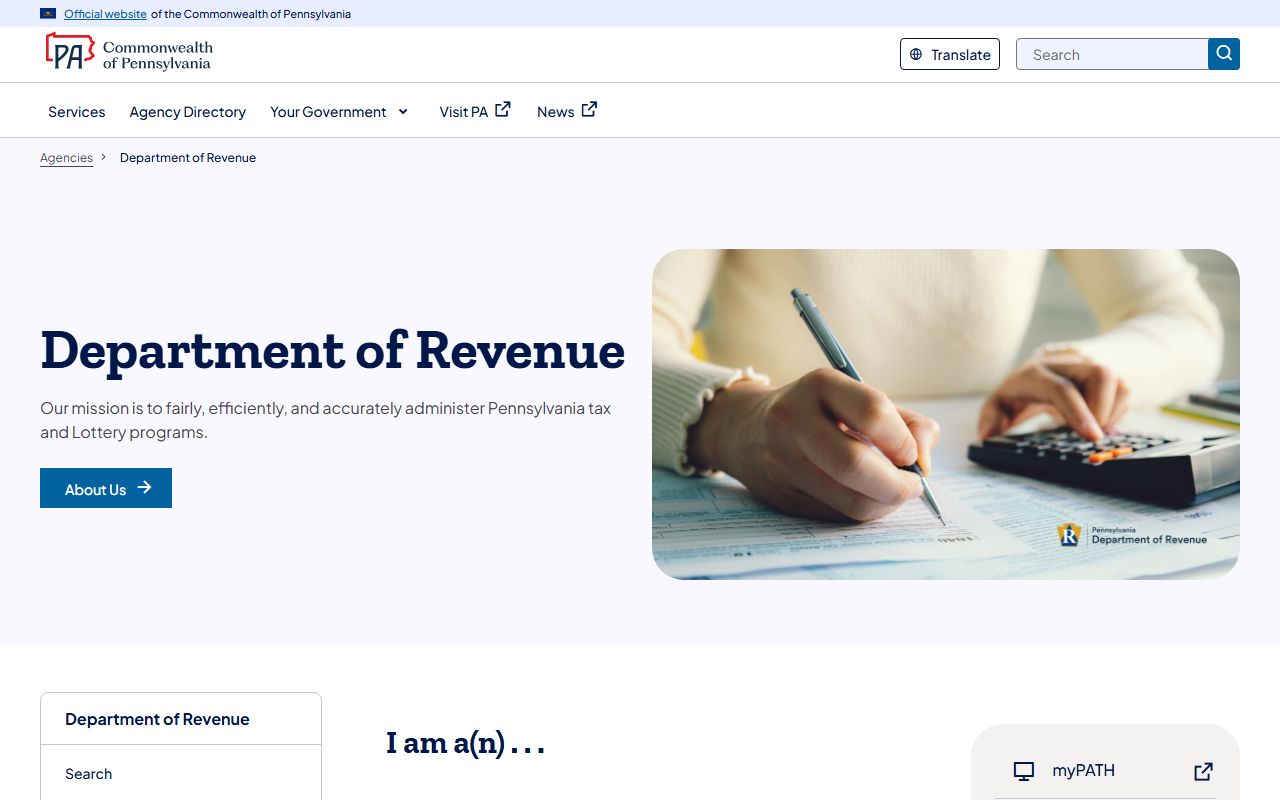
The Pennsylvania Department of Revenue administers the Property Tax/Rent Rebate Program, which provides direct rebates to eligible residents. Seniors aged 65 and older, widows and widowers aged 50 and older, and people with disabilities aged 18 and older may qualify if they meet income limits. The program also includes the Working Pennsylvanians Tax Credit, which can be worth up to $805 for qualifying filers. While the Department of Revenue does not set local property tax rates, these programs directly reduce the net cost of property taxes for many households across the state.
Local school districts in Pennsylvania receive a portion of state gaming revenue, which is used to fund the Homestead Exclusion. This reduces the assessed value of a primary residence before the school district millage rate is applied, lowering the school portion of the tax bill. Homeowners must apply through their county Assessment Office to receive the homestead exclusion. The Pennsylvania Department of Education oversees the distribution of these school property tax relief funds to districts statewide.
Accessing Pennsylvania Property Tax Records Online
Online access to Pennsylvania property tax records has expanded greatly in recent years. The screenshot below shows how the public records directory organizes county-level access points, giving users a quick path to county databases across the state.
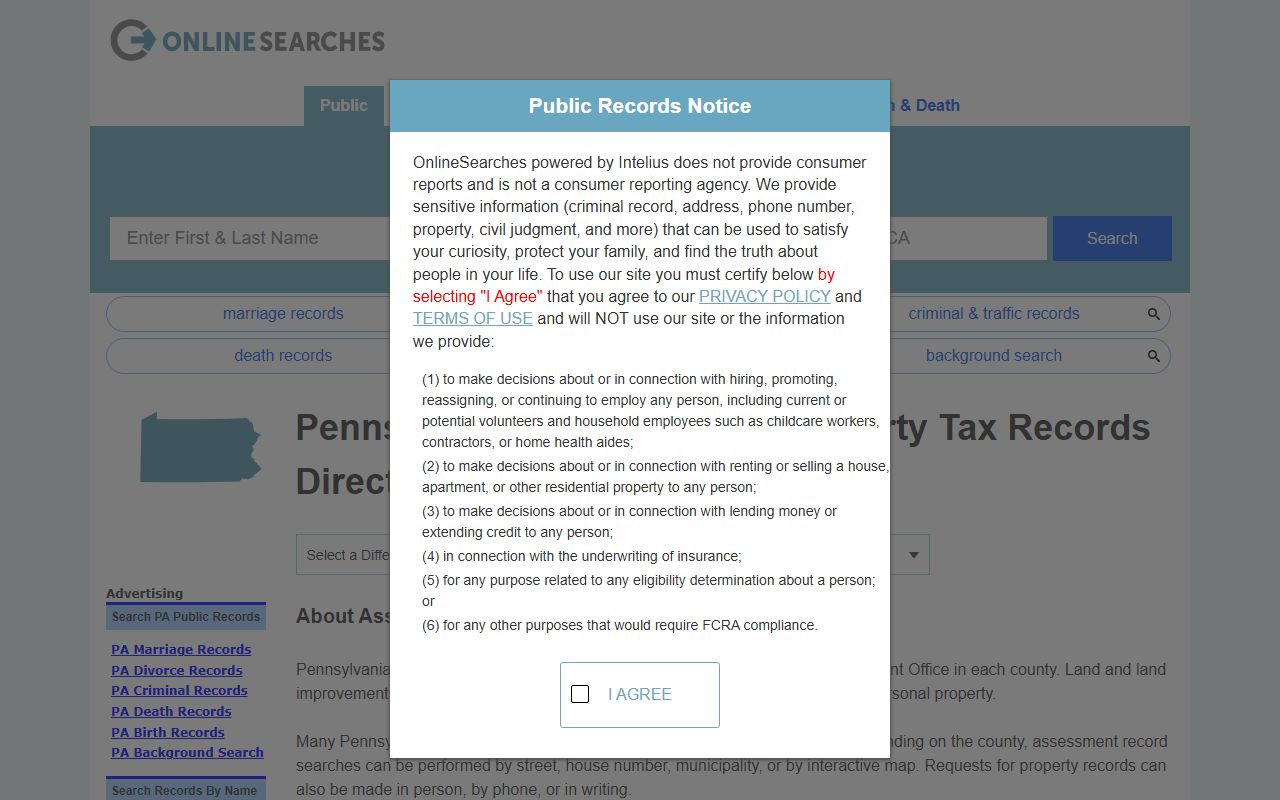
County assessment offices across Pennsylvania maintain searchable databases that are updated as changes occur. Parcel data is often available through a GIS viewer that lets users zoom into a map and click on any property to pull up its record. Larger counties such as Allegheny, Philadelphia, Bucks, and Montgomery tend to have the most feature-rich portals, with the ability to view recent sales history, tax payment status, and zoning information in addition to basic assessed values. Smaller counties may offer simpler search tools but still provide the core data required by state law.
Some commercial subscription services aggregate data from multiple counties and package it for real estate professionals, lenders, and researchers. These platforms go beyond what free county databases offer, providing trend data, comparable sales, and bulk export options. For most individual users, however, the free county portals provide everything needed to look up a specific property's tax record, ownership history, and assessed value without creating an account or paying a fee.
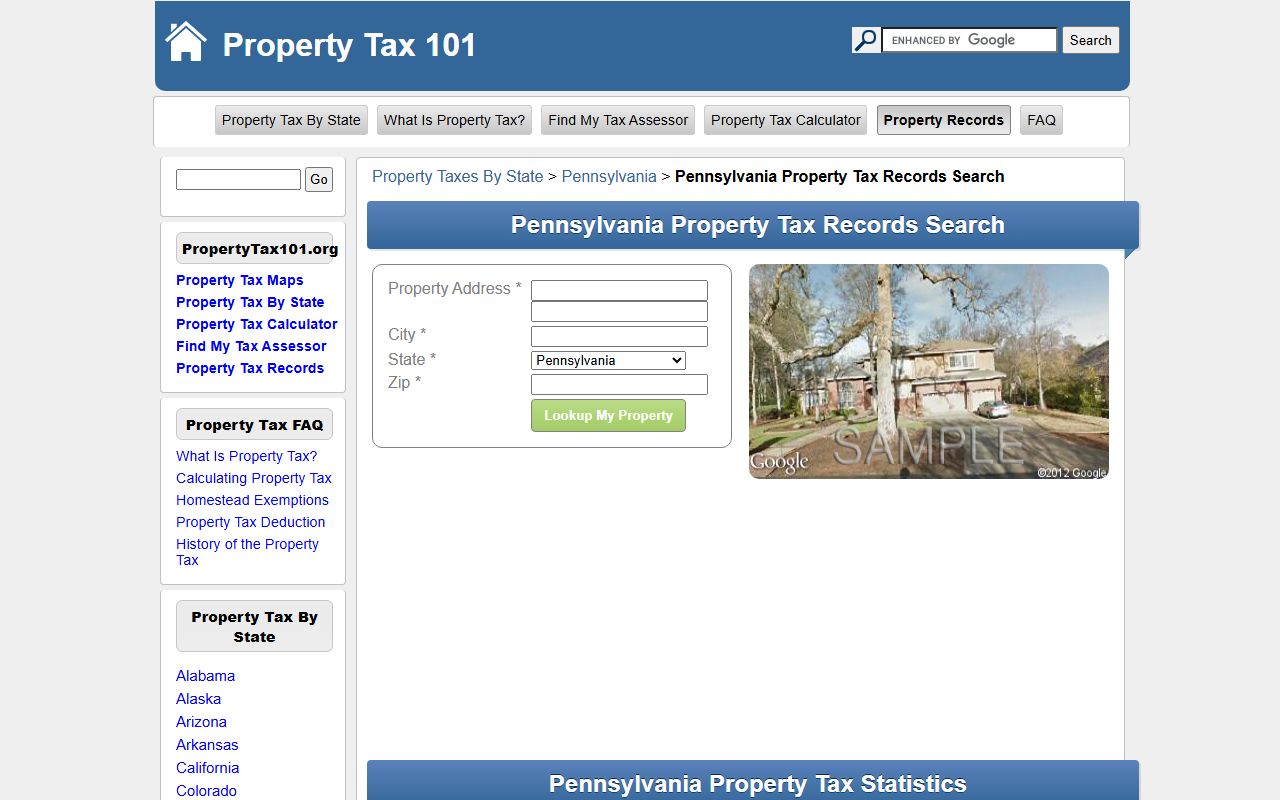
The PropertyTax101 Pennsylvania page also aggregates key statistics and provides a starting point for users who want statewide context before diving into a county database.
Pennsylvania Property Tax Laws and Statutes
The legal image below is from the Pennsylvania General Assembly's consolidated statutes page, which is the official source for the laws that govern property taxation throughout the state. Understanding this framework helps property owners know their rights and responsibilities.
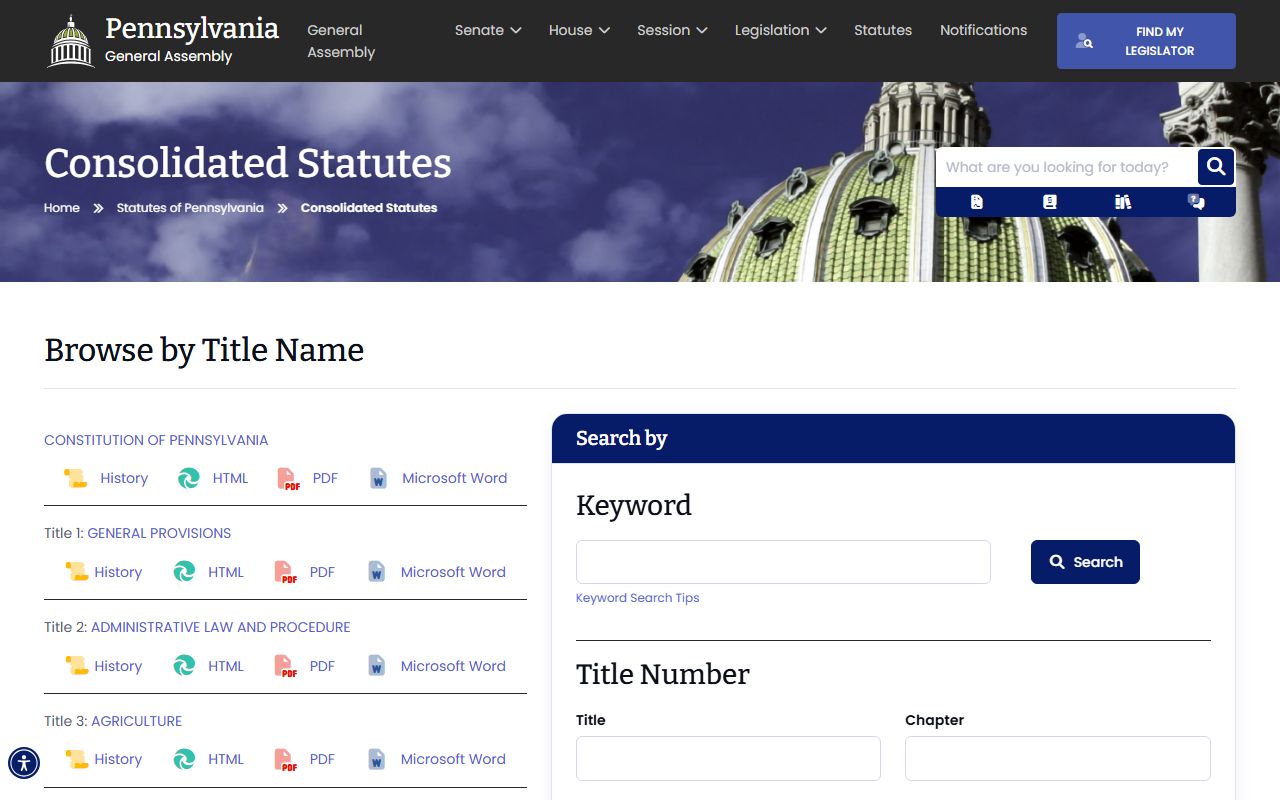
Pennsylvania property tax law is governed primarily by Title 72 of the Pennsylvania Consolidated Statutes, which covers taxation and fiscal affairs. This title sets out the rules for how counties assess property, what exemptions apply, how tax bills must be issued, and what remedies are available to owners who believe their assessment is wrong. The Uniformity Clause in Article VIII, Section 1 of the Pennsylvania Constitution also plays a central role. It requires that all real property of the same class be taxed at the same rate, which is the legal basis for most successful assessment appeals.
The Pennsylvania Office of Open Records enforces the Right-to-Know Law, which presumes that government records including property assessment rolls, tax maps, and ownership information are public. Any person can submit a written request to a county Assessment Office for these records, and the office must respond within five business days. If a request is denied, the requester can appeal to the Office of Open Records. This law makes Pennsylvania property tax records broadly accessible to the public without requiring any special showing of need or interest.
The Local Government Commission serves as an advisory body on issues related to local property taxation, helping lawmakers and county officials interpret statutes and develop consistent practices. Its guidance helps bridge gaps between Title 72's general requirements and the varying procedures used by individual counties.
What Pennsylvania Property Tax Records Contain
The image below is from the Pennsylvania property tax statistics resource and gives a sense of the data categories that assessment offices track and report for properties statewide.
A standard Pennsylvania property tax record includes several layers of information. The property record card contains the owner's name and mailing address, the parcel identification number, the legal description of the land, lot size, zoning classification, and the land's assessed value separate from any improvements. Building data covers the structure's type, age, size, number of stories, basement and garage details, and the assessed value assigned to the improvements. Both the land value and improvement value are added together to produce the total assessed value used for tax purposes.
Tax records also show the millage rates applied by each taxing body, the gross tax billed, and any exemptions or reductions that were applied to reduce the final amount due. Records for properties enrolled in special programs such as the Homestead Exclusion or Clean and Green preferential assessment will reflect those adjustments. Historical records may show prior owners, past assessed values, and changes made after permits were pulled for construction or renovation work. Assessment offices also maintain tax maps that show the boundaries of each parcel relative to neighboring properties, roads, and geographic features.
Clean and Green Preferential Assessment Program
The DCED page below covers the local government programs that include preferential assessment options like Clean and Green, which affects how agricultural and forested land is valued for tax purposes in Pennsylvania counties.
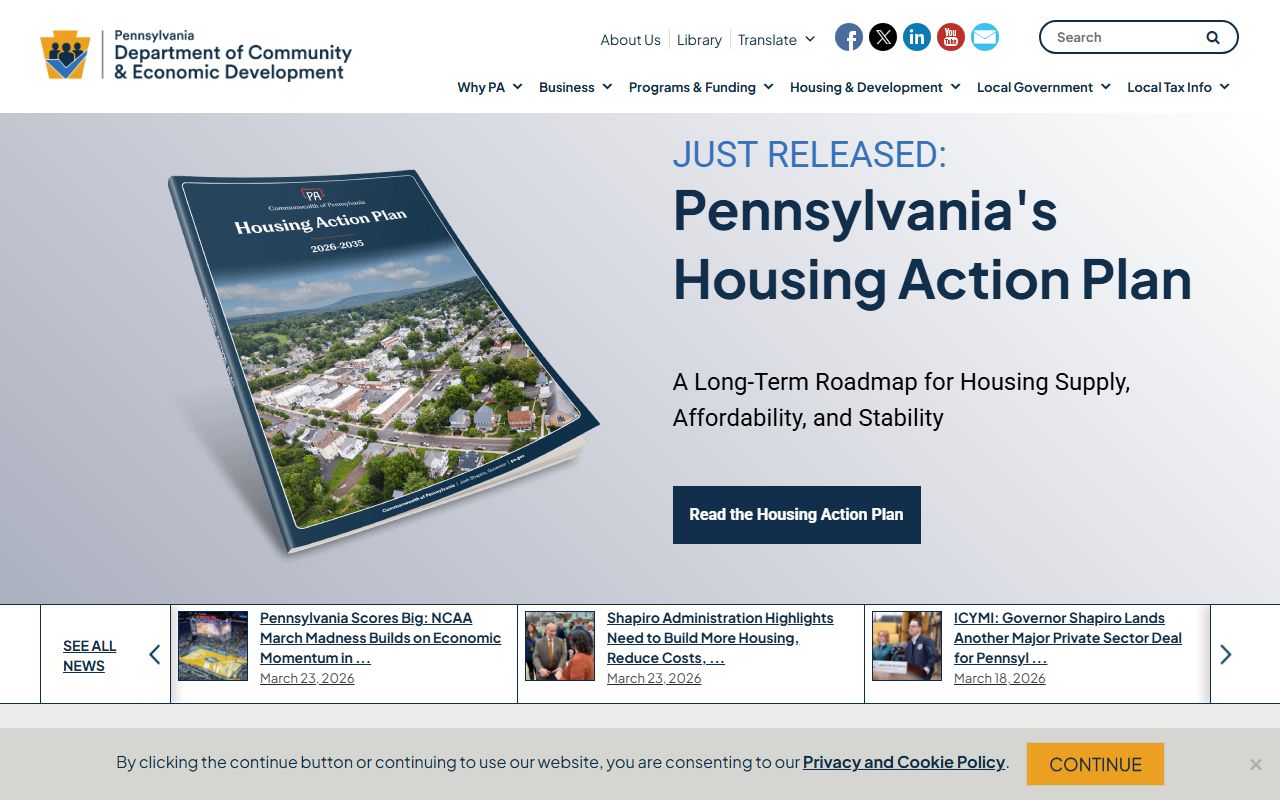
Pennsylvania's Clean and Green program, established under Act 319 of 1974, allows qualifying land to be assessed at its use value rather than its fair market value. This can produce a much lower assessed value and, in turn, a significantly lower tax bill for eligible landowners. To qualify, a property must be at least 10 acres in size or must generate at least $2,000 in annual farm income. The land must be actively used for agricultural, forestall, or open space purposes. More than 9.3 million acres are currently enrolled in the program statewide, making it one of the largest land preservation tools in Pennsylvania history.
Property owners who want to enroll must apply through their county Assessment Office. Once enrolled, the preferential assessment applies as long as the land continues to meet program requirements. If a landowner converts the land to a non-qualifying use, a rollback tax is triggered. The rollback covers the difference between what was paid under the preferential assessment and what would have been paid at market value, going back up to seven years. This rollback provision ensures the program remains tied to genuine agricultural and conservation use rather than serving as a simple tax reduction tool.
Note: Each county Assessment Office has its own enrollment deadline and application process, so contact your local office early if you think your property may qualify for Clean and Green.
Appealing Your Pennsylvania Property Tax Assessment
The Pennsylvania Courts page below explains the court system that handles property tax appeals beyond the county level, giving property owners a path to challenge assessments they believe are unfair or inaccurate.
Every Pennsylvania county has a Board of Assessment Appeals, which is the first stop for property owners who want to challenge their assessed value. An appeal must be filed by the deadline set by the county, which varies but typically falls in the summer or early fall. At the hearing, the owner can present evidence that the assessed value is higher than what the Uniformity Clause requires, often by showing that comparable properties are assessed at lower values or that the market value of the property is lower than what the assessment implies.
If the Board of Assessment Appeals does not rule in the owner's favor, the case can be appealed to the Court of Common Pleas in that county. From there, a further appeal can go to the Commonwealth Court of Pennsylvania or ultimately the Pennsylvania Supreme Court. The Pennsylvania court system has developed a significant body of case law around the Uniformity Clause, and many property owners have succeeded in reducing their assessments through this process. Hiring a licensed appraiser to produce an independent valuation is often the strongest piece of evidence in a formal appeal.
Property Tax Relief Programs in Pennsylvania
The image below from the Pennsylvania Department of Education shows how the state manages school property tax relief, which is one of the most significant sources of property tax reduction available to homeowners across Pennsylvania.

Pennsylvania offers several overlapping relief programs that can reduce the property tax burden for qualifying homeowners. The Homestead Exclusion, funded through state gaming revenue, lowers the taxable assessed value for primary residences, reducing the school district portion of the tax bill. The Farmstead Exclusion provides a similar benefit for buildings used in farm operations. Both programs require an application to the county Assessment Office and must be renewed if the property changes hands.
The Property Tax/Rent Rebate Program administered by the Department of Revenue provides direct cash rebates to eligible seniors, widows and widowers, and people with disabilities. Rebate amounts depend on income and the amount of property taxes paid. The Local Government Commission and the Pennsylvania Association of Assessing Officers (PAAO) both track how these programs interact with county assessment practices to help ensure that relief reaches eligible residents consistently. The Local Government Commission also advises county and local governments on how to structure these programs within the bounds of state law.
Pennsylvania Property Tax Rights and Public Access
The Right-to-Know Law resource page below is the official state portal for understanding how to request public records in Pennsylvania, including property tax records held by county Assessment Offices and other local government agencies.
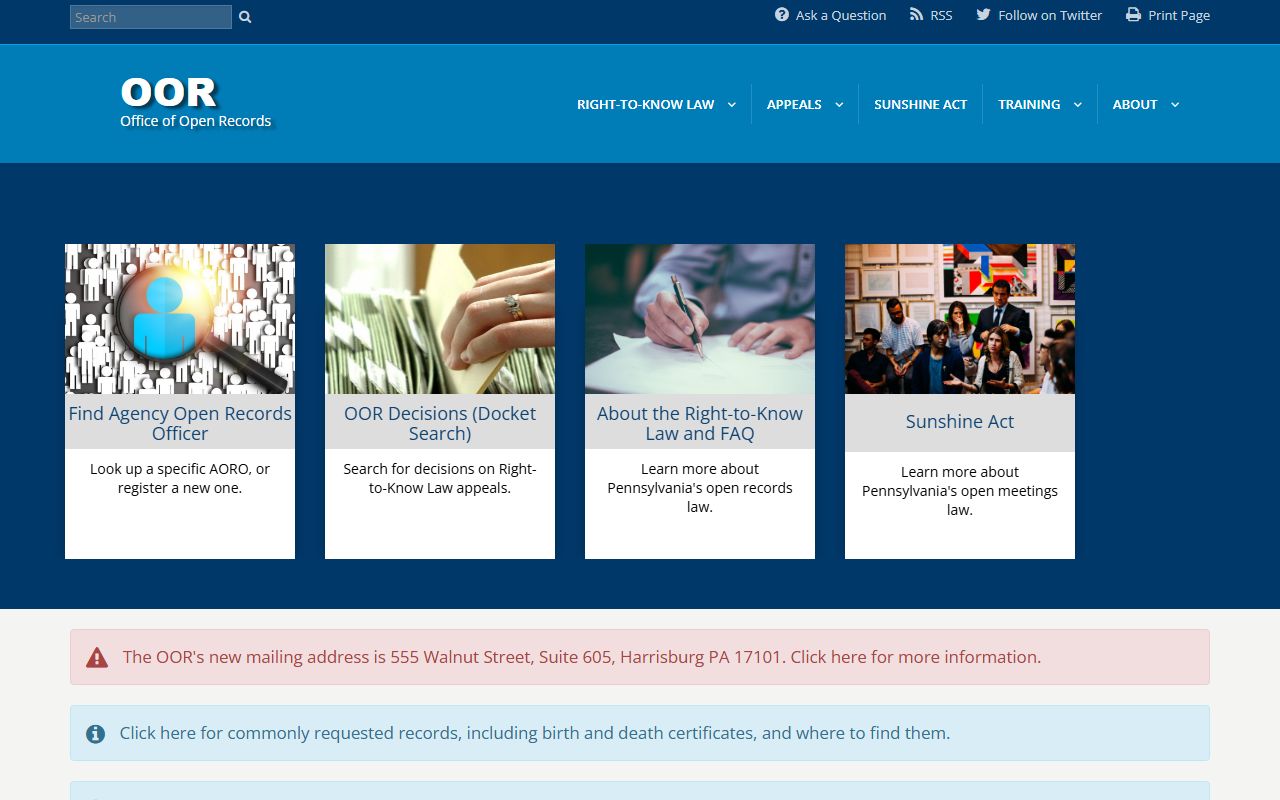
Under Pennsylvania's Right-to-Know Law, property tax records are presumed to be public documents. This means a county Assessment Office cannot refuse access to assessment rolls, property record cards, or tax maps without a specific legal justification. Any person, whether a Pennsylvania resident or not, can submit a written request for these records. The office has five business days to respond, and if additional time is needed, it must notify the requester within that window. Requests can be sent by mail, email, or in person, depending on the county's process.
The Office of Open Records provides guidance, sample request forms, and a process for appealing denied requests. Property owners, journalists, researchers, and real estate professionals all use the Right-to-Know process regularly to obtain bulk data or specific records from county offices. Understanding this law is especially useful when a county's online database does not include the level of detail you need, such as historical ownership chains, older assessment values, or tax maps for rural parcels that may not appear in a GIS system.
Note: The Right-to-Know Law applies to records held by government agencies, but some data aggregators and commercial services also maintain historical property records that predate current county database systems.
Pennsylvania State Data and Property Tax Statistics
The Tax Foundation page below tracks Pennsylvania's tax environment, including property tax rates, rankings, and comparisons with other states, providing useful context for anyone researching Pennsylvania property tax records.
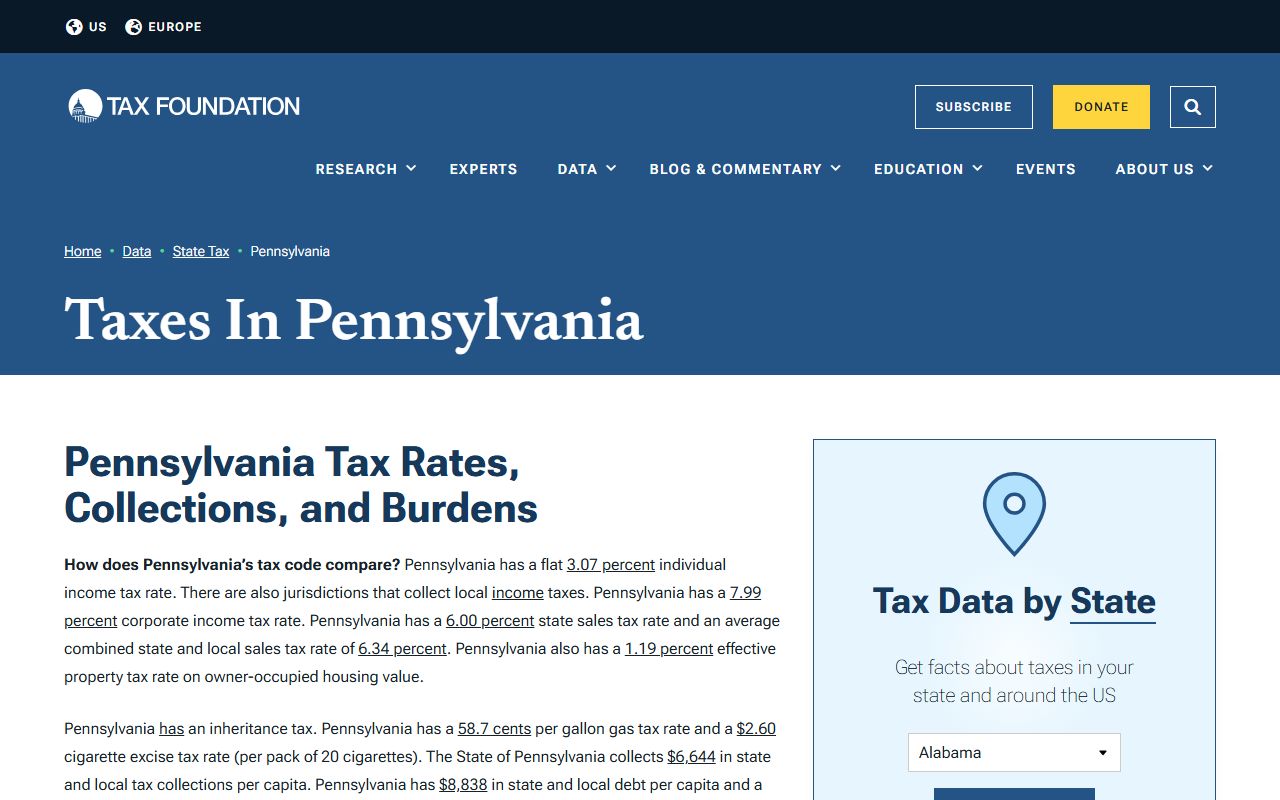
Pennsylvania's median annual property tax is $2,223, which equals about 1.35% of the median home value of $164,700. That rate also represents roughly 3.64% of the median household income of $61,124. The Tax Foundation tracks Pennsylvania's tax data as part of its State Tax Competitiveness Index, which scores states on the overall burden and structure of their tax systems. Pennsylvania consistently ranks in the middle tier nationally for property taxes, with rates that are higher than most Southern states but lower than many Northeastern neighbors.
The Pennsylvania State Data Center at Penn State Harrisburg compiles Census data on housing stock, population trends, and home values that help put property tax data in context. Property values and tax burdens vary widely across the state's 67 counties. Urban counties like Philadelphia, Allegheny, and Montgomery have high volumes of transactions and frequent reassessments, while rural counties in the north and center of the state may go many years without a countywide reassessment.
The Local Government Commission image below highlights how advisory data and legislative research support local tax decisions across Pennsylvania's many municipalities and school districts.
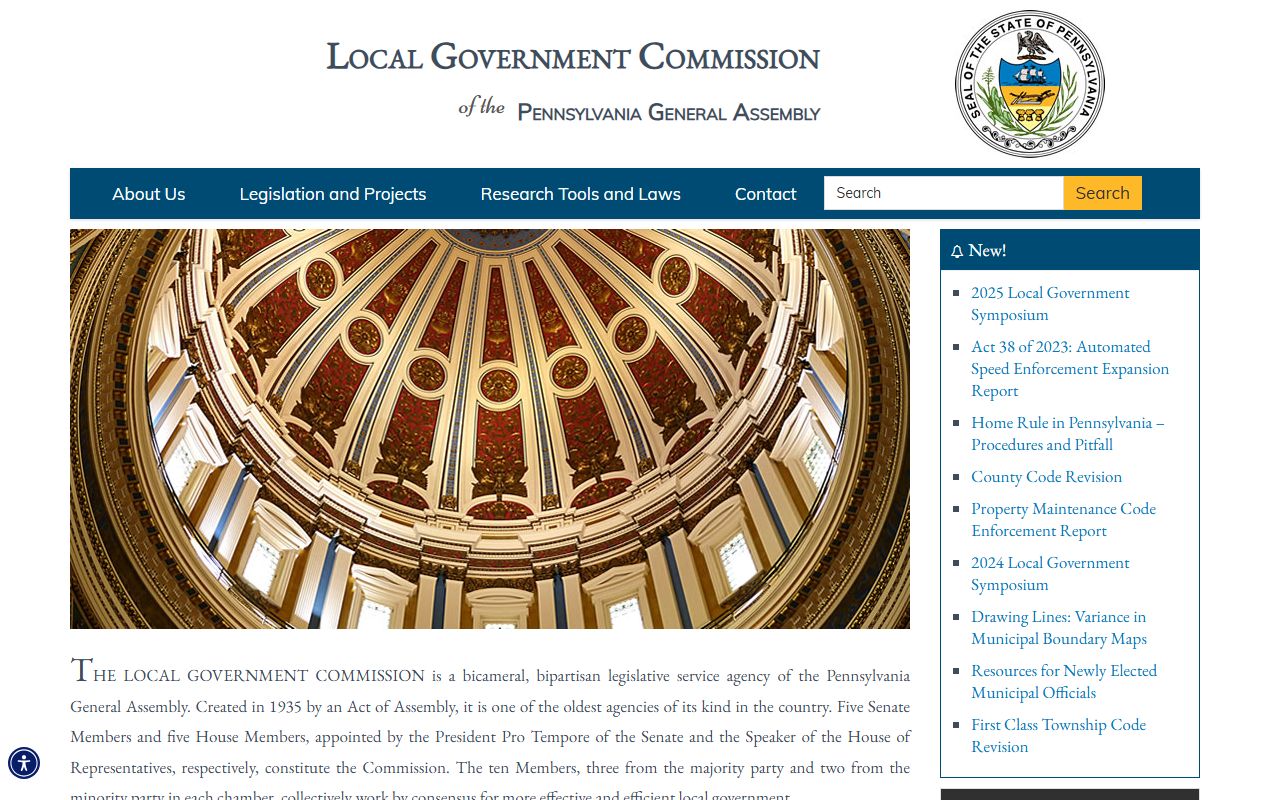
County reassessments can cause significant shifts in individual tax bills even when millage rates stay flat. When a county reassesses, some properties see their assessed values rise faster than others, changing who bears the largest share of the total tax burden. Tracking property tax records over multiple assessment cycles is the best way to understand how a county's tax base has shifted and whether individual properties are taxed consistently with their neighbors. The Pennsylvania State Data Center provides population and housing data that researchers use to study these trends over time.
Pennsylvania Courts and Property Tax Oversight
The image below from the Pennsylvania State Data Center illustrates the range of demographic and housing data that researchers, assessors, and policymakers use when studying property values and tax distribution across the state.
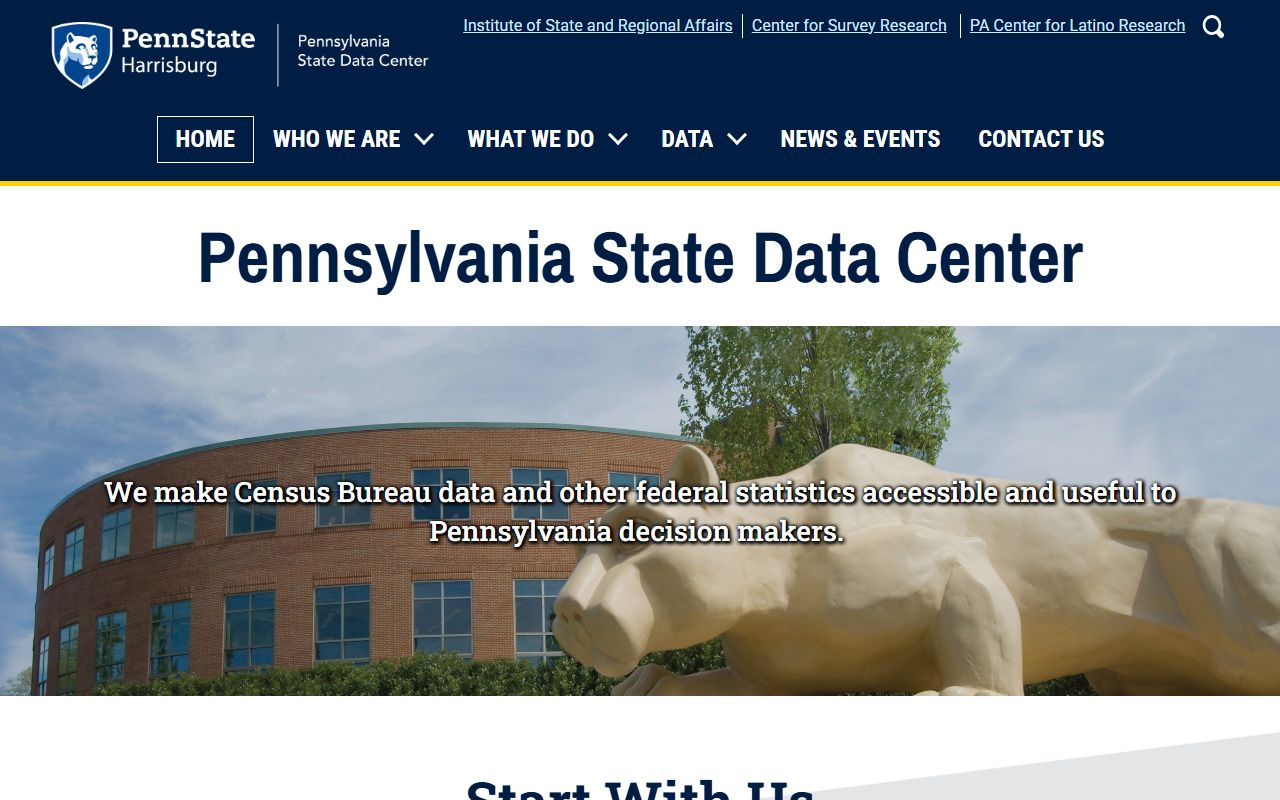
The Pennsylvania Courts system oversees the appeal process that is a critical check on county assessment practices. Courts of Common Pleas hear appeals from the county Board of Assessment Appeals and apply the standards set out in the Pennsylvania Constitution and Title 72. The Uniformity Clause has been interpreted broadly by Pennsylvania courts to mean that not only must the same rate apply to all properties, but the underlying assessments must also reflect a consistent ratio of assessed value to market value across all parcels in a taxing district. This standard gives courts meaningful authority to require reassessments when the evidence shows widespread inconsistency.
Beyond individual appeals, class action challenges have sometimes forced entire counties to conduct full reassessments after courts found that the existing assessment ratios violated the Uniformity Clause. These cases have shaped how Pennsylvania counties approach the reassessment process and how frequently they must update their rolls. Property owners who believe their assessment is out of line with the county's overall assessment ratio can use ratio studies published by STEB to support their appeals, providing an objective benchmark against which individual parcel data can be compared.
Browse Pennsylvania Property Tax Records by County
Select a county below to find property tax records, assessed values, and Assessment Office contact information for that county.
Browse Pennsylvania Property Tax Records by City
Select a city below to find property tax records and local assessment data for that municipality.