
Lancaster City Property Tax Records and County Assessment Data
Lancaster is the county seat of Lancaster County and one of the oldest inland cities in the United States. Property tax records for Lancaster city are managed by the Lancaster County Assessment Office, which values all parcels within the city and makes those records publicly accessible. Owners, buyers, and researchers can find assessed values, ownership details, deed references, and sales history through the county's official channels. This page explains how assessments work in Lancaster city, where to search records, and what relief programs may be available to property owners.
Lancaster Quick Facts
How Lancaster City Property Tax Assessments Work
Property assessments in Lancaster city are the responsibility of the Lancaster County Assessment Office, located at 150 North Queen Street, Suite 310, Lancaster, PA 17608. The office can be reached by phone at (717) 299-8381. Lancaster County conducted its most recent countywide reassessment with an effective date of January 1, 2018, establishing property values at 100% of market value as of that date. This means assessed values were set to equal full market value at the time of reassessment, giving property owners a direct benchmark for comparing their assessment to market conditions.
The county maintains records for more than 190,000 parcels throughout Lancaster County, including all properties within Lancaster city. The assessment office uses a computer-assisted mass appraisal approach that applies consistent valuation models across large groups of similar properties. For Lancaster city, where the housing stock includes a mix of historic rowhouses, industrial conversions, and newer construction, the appraisal model accounts for property type, location within the city, lot size, building size, and condition.
Lancaster city government at cityoflancasterpa.gov handles municipal services that include property tax and fee collection, snow and ice removal, permits and licensing, and housing inspections. The city collects taxes on behalf of the various taxing bodies but does not set assessed values. Millage rates applied to assessed values are set separately by Lancaster County, Lancaster city, and the School District of Lancaster, each through their own annual budget process.
Note: The 2018 reassessment set all Lancaster County properties at 100% of market value. Properties that have changed significantly in condition or use since that date may warrant a closer look at whether the current assessment still reflects current market realities.
Searching Lancaster City Property Tax Records Online
Lancaster County provides online access to property tax records through the county's official website at lancastercountypa.gov. The online portal allows users to search by property address, parcel identification number, or owner name. Results display the assessed value broken down into land and improvement components, current ownership information, deed book and page references, and a history of recorded property sales for that parcel.
The county's property records system reflects data gathered during and since the 2018 reassessment, updated with new ownership information from recorded deeds and with permit data from city building inspections. Because Lancaster city operates an active housing inspection program, physical changes to city properties are more likely to be captured in county records than they might be in areas with less robust inspection activity. This makes the online database particularly reliable for Lancaster city parcels.
Lancaster city government handles property tax collection, permits, housing inspections, and other municipal services within the city.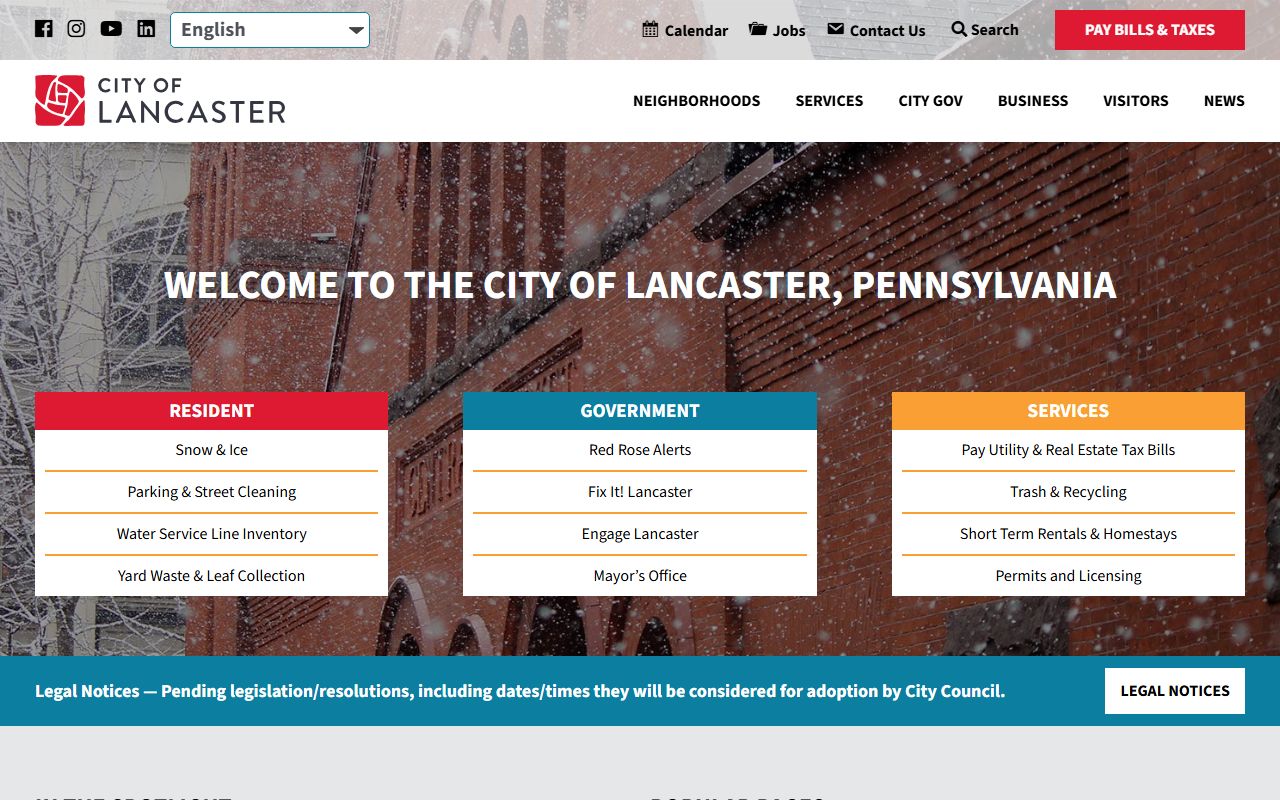
The city's online resources complement the county assessment database, and both should be consulted when researching a Lancaster city property thoroughly.
For records not available through the county's online portal, the Pennsylvania Right-to-Know Law gives any person the right to request public government records in writing. Lancaster County and Lancaster city both maintain Right-to-Know officers who can process formal record requests within the response timeline required by state law. This pathway ensures that even documents not posted publicly online remain accessible to anyone who needs them.
Note: The Lancaster County Assessment Office processes property record updates as deeds are recorded at the county courthouse. There may be a brief processing lag between a property sale and the time the new ownership information appears in the online database.
In-Person Access to Lancaster Property Records
The Lancaster County Assessment Office at 150 North Queen Street, Suite 310 in Lancaster is the primary in-person destination for property tax record research. Staff are available during regular weekday business hours and can help property owners review their parcel records, understand how assessed values were derived, and identify what steps are available if a correction is needed. Bringing a property address or parcel identification number will help staff locate the correct record quickly.
The Lancaster County Recorder of Deeds office is also located within the county courthouse complex and holds official copies of all deeds, mortgages, and liens recorded within the county. For Lancaster city properties, which often have long ownership histories dating back many decades or longer, the deed books at the courthouse provide the most complete chain of title available. More recent recordings are typically searchable through an online index on the county's website.
Lancaster city's Department of Public Works and related offices handle permits and inspections that may affect property records. Owners planning significant improvements to a Lancaster city property should contact the city directly to understand permitting requirements, because permitted work is often reported to the county assessment office and may trigger a review of the property's assessed value.
Lancaster Property Tax Assessment Appeals Process
Property owners in Lancaster city who believe their assessed value is inaccurate can file a formal appeal with the Lancaster County Board of Assessment Appeals. The standard filing deadline for annual appeals in Lancaster County is August 1. Appeals filed after this date are not eligible for adjustment in the current tax year and must wait until the following appeal cycle. Property owners who receive an assessment notice showing a changed value should review it promptly to determine whether an appeal is warranted before the deadline passes.
A successful appeal requires documented evidence that the county's assessed value departs from the property's actual market value or that the recorded physical description contains errors. The most common types of supporting evidence include comparable sales of similar Lancaster city properties at prices below the level implied by the current assessment, an independent appraisal from a licensed Pennsylvania real estate appraiser, or records showing physical errors in the county's file such as an overstated living area or incorrect construction date. All evidence should be organized clearly and submitted with the appeal form.
Hearings before the Board of Assessment Appeals are generally informal proceedings where the property owner presents their evidence and county staff may offer a response. After the board issues its decision, a property owner who remains dissatisfied may appeal further to the Lancaster County Court of Common Pleas. The Pennsylvania Consolidated Statutes provide the legal framework for all county assessment appeal procedures and establish the rights of property owners throughout the process.
Note: Taxing bodies including Lancaster city and the School District of Lancaster also retain the right to appeal assessments upward if they believe a property is undervalued, so being aware of the overall assessment landscape in your neighborhood is worthwhile.
Tax Relief Programs Available to Lancaster City Property Owners
Lancaster city residents have access to several property tax relief programs established under Pennsylvania law. The Homestead Property Exclusion reduces the assessed value used to calculate school district property taxes for owner-occupied primary residences throughout Pennsylvania. The School District of Lancaster participates in this program, and homeowners who qualify can reduce their school tax bill by applying for the Homestead Exclusion through the Lancaster County Assessment Office. Applications must be filed by March 1 to take effect for that tax year.
The Pennsylvania Property Tax and Rent Rebate program, administered by the Pennsylvania Department of Revenue, provides annual rebates to eligible seniors aged 65 and older, widows and widowers aged 50 and older, and people with disabilities aged 18 and older. Income limits apply, and the rebate amount is calculated based on income level and the amount of property tax paid during the prior year. Applications are typically accepted beginning each January through the state's Department of Revenue, and Lancaster County has local assistance programs to help seniors complete the application process.
The City of Lancaster administers additional local programs and has historically pursued federal and state funding for housing stabilization that can intersect with property tax obligations. Homeowners in financial distress should contact the city's community development office to ask about any current assistance programs that may be available. The Pennsylvania Department of Community and Economic Development also publishes resources on housing assistance and community development funding that benefits cities like Lancaster.
What Lancaster City Property Tax Records Contain
The Lancaster County Assessment Office database holds a detailed record for each of the more than 190,000 parcels in the county, including all Lancaster city properties. Each record displays the legal owner's name and mailing address, the parcel identification number that uniquely identifies the property within county systems, and references to the deed book and page where the ownership transfer documents are recorded. These references allow a researcher to move from the assessment record to the full ownership document quickly.
Physical property characteristics in each Lancaster city record include the lot dimensions, total building square footage, year the structure was built, construction type, number of stories, and interior counts such as bedrooms and bathrooms for residential properties. These figures were established or updated during the 2018 reassessment process and are supplemented with new data from building permits and inspections. For older Lancaster city properties, some physical descriptions may reflect the state of the property at the most recent inspection or permit rather than the original construction.
Sales history recorded for each parcel shows prior property transfers with dates and recorded prices. Lancaster city has seen a significant revitalization over the past decade, with many properties selling at prices that reflect renewed interest in urban living in historic Amish Country. Comparing the 2018 assessed value to more recent sales activity in the same neighborhood can reveal whether a property's assessment remains in line with the current market.
Note: Lancaster County's 100% assessment ratio from the 2018 reassessment makes it more straightforward than many Pennsylvania counties to compare assessed values to current market evidence, since no common level ratio adjustment is needed for the base year.
Lancaster Property Records and Related Government Resources
The City of Lancaster government website provides access to permit applications, zoning information, and housing inspection contacts that affect how properties are classified and maintained within the city. Because the city runs an active inspection program, permit records can sometimes clarify physical changes to a property that have not yet been captured in the county assessment record. Reviewing both city and county records together gives a more complete picture of a property's current status.
The Pennsylvania Department of Community and Economic Development provides resources relevant to Lancaster city's ongoing revitalization, including information on tax increment financing, neighborhood improvement programs, and community development block grants. Understanding these programs can help property owners assess how public investment in Lancaster neighborhoods may affect long-term assessed values and tax obligations.
The Pennsylvania Department of Revenue administers statewide tax programs and provides downloadable forms and instructions for property tax relief applications including the Homestead Exclusion and the Property Tax and Rent Rebate. The department's website also explains the income limits and documentation requirements that Lancaster city residents must meet to qualify for these programs each year.
Lancaster City and Lancaster County Connection
Lancaster city is the county seat of Lancaster County, and the Lancaster County Assessment Office at 150 North Queen Street is the primary source for all property valuation records affecting Lancaster city parcels. The county's 2018 reassessment at 100% of market value established the current tax base for the city, and the county's online portal is the starting point for any Lancaster property tax records search.
Nearby Cities
Explore property tax records for other cities and communities in central Pennsylvania.