
Pittsburgh Property Tax Records and Parcel Data
Pittsburgh property tax records are maintained and administered through Allegheny County, which serves as the assessment authority for all properties within city limits. Whether you are searching for assessed values, ownership history, or parcel characteristics, most Pittsburgh property tax records are available through the Allegheny County Real Estate portal. This guide walks through how to locate, access, and understand property tax records for any address in Pittsburgh, Pennsylvania's second-largest city and the county seat of Allegheny County.
Pittsburgh Quick Facts
How Pittsburgh Property Assessments Work
Property assessments for every parcel in Pittsburgh are handled by the Allegheny County Office of Property Assessments, not by the city itself. This is the standard arrangement across Pennsylvania: while municipalities levy and collect property taxes, the valuation of each parcel is typically the responsibility of the county. In Pittsburgh's case, Allegheny County determines the assessed value that forms the basis for calculating what each property owner owes.
Allegheny County has not conducted a countywide reassessment since 2012. That assessment established the base year values that continue to be used today for the majority of properties in the county, including all Pittsburgh parcels. While individual properties can receive updated assessments following a sale, major renovation, or formal appeal, the countywide baseline remains anchored to 2012 market values. This long gap between reassessments means that assessed values in Pittsburgh often differ substantially from current market prices, particularly in neighborhoods that have seen significant appreciation or decline since that year.
The county currently tracks more than 580,000 parcels across all municipalities within Allegheny County. Pittsburgh properties make up a significant share of that total. Each parcel in the county receives a unique parcel identification number that serves as the primary key for all official records in the assessment system.
Note: Because Allegheny County has not reassessed since 2012, property owners who have purchased recently at market prices may find their assessed value differs considerably from what they paid, which can be a basis for a formal appeal.
Searching Pittsburgh Property Tax Records Online
The primary online resource for Pittsburgh property tax records is the Allegheny County Real Estate portal. This portal provides free public access to property assessment data, sales history, tax information, and ownership records for every parcel in the county, including all Pittsburgh neighborhoods from the North Shore to Mount Oliver. Users can search by address, parcel ID, or owner name to retrieve records for a specific property.
Search results on the Allegheny County Real Estate portal display the property's current assessed value, the land and building breakdown of that value, recent sales transactions, and tax bill information. The portal also shows the parcel's legal description, lot dimensions, and in many cases the structure type and building characteristics that inform the assessed value. For Pittsburgh properties, this data reflects Allegheny County's 2012 base year values with any subsequent adjustments applied.
The City of Pittsburgh's official website provides access to city services, tax payment options, and links to county assessment resources.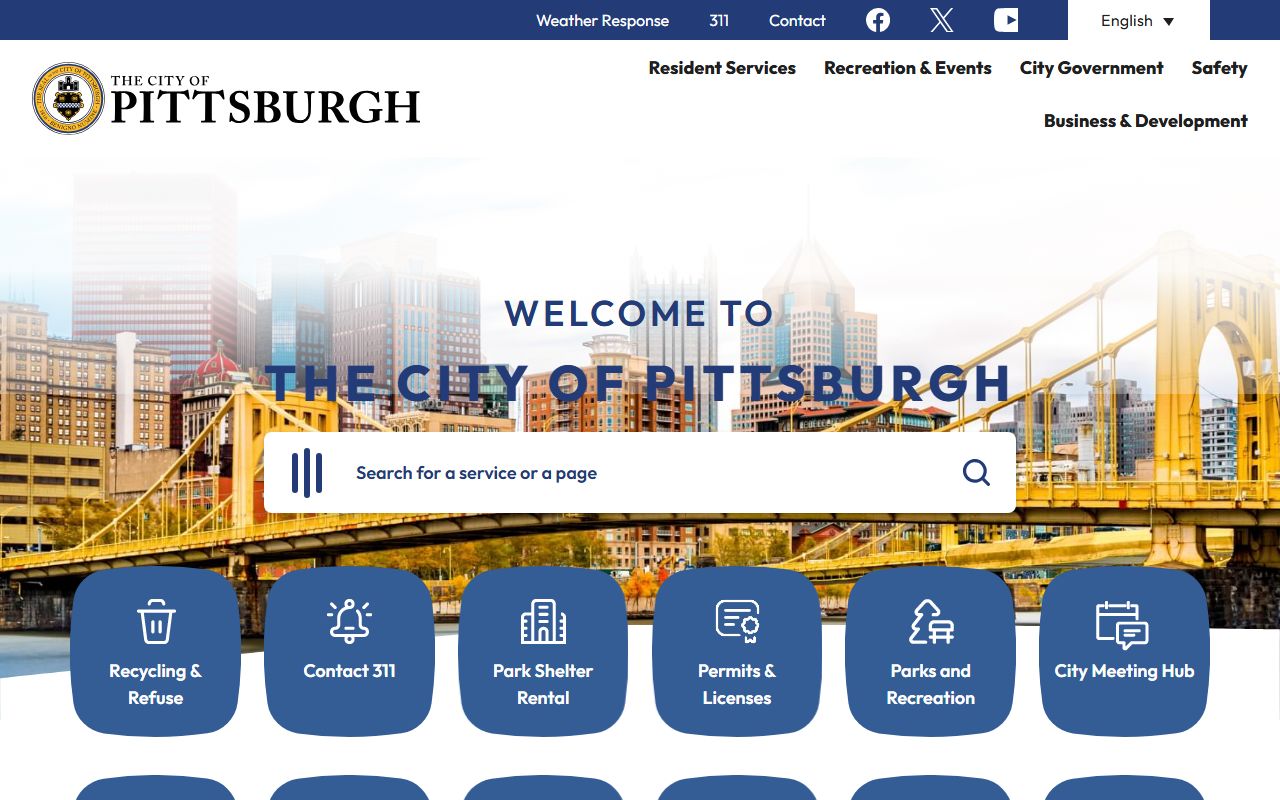
The city's website connects residents to billing, payment, and contact information for Pittsburgh property taxes billed and collected at the municipal level.
For tax balance and payment information specific to Pittsburgh's municipal tax levy, the City of Pittsburgh's official website provides links to payment resources and contact information for the city's tax office. Pittsburgh levies its own city tax rate on top of the Allegheny County rate and the school district millage, so property owners must account for all three levies when calculating their total annual property tax obligation. The Pennsylvania Right-to-Know Law applies to all public agencies including Allegheny County and the City of Pittsburgh, giving residents a formal pathway to request records not available through standard public portals.
Note: The Allegheny County Real Estate portal is free to use and does not require an account or registration. All information retrieved through it is public record under Pennsylvania law.
Pittsburgh Property Tax Records: In-Person Access
Property owners and researchers who prefer to access Pittsburgh property tax records in person can visit the Allegheny County Office of Property Assessments at the County Office Building, 542 Forbes Avenue, Pittsburgh, PA 15219. Staff at this office can assist with questions about assessed values, parcel data, exemptions, and the assessment appeal process. The office serves all municipalities in Allegheny County and handles a high volume of inquiries from Pittsburgh property owners.
The City of Pittsburgh's own offices can assist with questions specific to the municipal tax levy and payment history for city-billed taxes. Because Pittsburgh's property tax system involves three separate taxing bodies (the city, Allegheny County, and the Pittsburgh Public Schools), property owners may need to contact more than one office depending on the specific question they have. The county office handles assessed values, while the city and school district each manage their own billing and collection operations.
Pennsylvania's Consolidated Statutes govern the legal framework for property assessment and taxation statewide. Title 72 of those statutes contains the specific provisions applicable to county assessment offices, appeal rights, and taxpayer obligations. Understanding this framework helps Pittsburgh property owners know exactly which office to contact for which type of inquiry.
Appealing Pittsburgh Property Assessments
Pittsburgh property owners who believe their assessed value is inaccurate have the right to file a formal appeal with the Allegheny County Board of Property Assessment Appeals and Review. This independent board reviews evidence presented by property owners and the assessment office before issuing a determination. Appeals are typically filed annually, with deadlines set by the county each year. Property owners should check the current year's appeal deadline with the Allegheny County Office of Property Assessments directly to avoid missing the filing window.
A successful appeal requires evidence that the assessed value does not accurately reflect the property's actual market value as of the applicable base year. For most Pittsburgh properties, the relevant base year is still 2012, so comparable sales evidence from that period, along with current data demonstrating the relationship between 2012 and present values, forms the core of a typical appeal. Property owners can hire a licensed appraiser to prepare a formal valuation report, or they may present their own evidence including recent purchase prices and comparable sales.
If an owner is dissatisfied with the Board's decision, further appeal is available to the Allegheny County Court of Common Pleas. The Pennsylvania Department of Community and Economic Development publishes guidance for local governments and taxpayers on the assessment and appeal process under Pennsylvania law.
Note: Both taxing bodies (Allegheny County, Pittsburgh City, and the school district) also have the right to initiate appeals to increase an assessment, particularly following a sale at a price significantly above the assessed value. This practice, sometimes called a "sales chase," is permitted under Pennsylvania law.
Property Tax Relief Programs Available to Pittsburgh Residents
Pittsburgh property owners may qualify for several tax relief programs that reduce their annual tax burden. The Homestead Exclusion, authorized under the Pennsylvania Constitution and administered at the county level, reduces the assessed value of an owner-occupied primary residence for both county and school district tax purposes. Each taxing body sets its own exclusion amount, and property owners must apply separately or through a unified application process to receive the exclusion from each levy.
At the state level, the Pennsylvania Department of Revenue administers the Property Tax/Rent Rebate program. This program provides annual rebates to qualifying seniors aged 65 and older, widows and widowers aged 50 and older, and people with disabilities aged 18 and older whose income falls within the program's limits. The rebate amount varies based on income, with higher rebates going to those with the lowest incomes. Pittsburgh residents who meet the income and age criteria should contact the Department of Revenue or a local state representative's office for application assistance.
The Act 77 Senior Citizen Tax Relief program provides a homestead exemption specifically for qualifying low-income senior citizens in Allegheny County. Allegheny County also administers the Act 50 Homestead Exclusion, which applies to the county tax millage. Additionally, the Clean and Green program under Pennsylvania's preferential assessment law allows owners of qualifying agricultural or forest land to have their property assessed at use value rather than market value, which can significantly reduce taxes on eligible Pittsburgh-area parcels near the city's boundaries.
What Pittsburgh Property Tax Records Contain
Pittsburgh property tax records maintained by Allegheny County contain a comprehensive set of data for each parcel. The core record for any property includes the parcel identification number, current ownership information, the mailing address for tax billing purposes, and the legal description of the parcel. Sales history records show previous transfer dates and prices, allowing researchers to trace ownership over time and understand how a property's transactional value has changed.
Assessment data in the record includes the total assessed value and its breakdown between land and building components. For residential properties, building characteristics such as structure type, building size, age, number of rooms, and condition are also recorded. These physical attributes form the basis for the county's assessed value calculation. The records also reflect any exemptions applied to the property, such as the Homestead Exclusion or any exemptions granted to nonprofit or government-owned parcels.
Tax information in the record shows the current tax status, outstanding balances, and payment history for the county levy. School district and municipal tax records may be maintained separately by those taxing bodies, so a complete picture of all taxes owed on a Pittsburgh property may require consulting more than one source. The Pennsylvania Department of Revenue can assist with questions about state-level tax obligations that interact with local property taxes.
Related Offices and Resources for Pittsburgh Property Owners
The Allegheny County Real Estate portal is the starting point for most Pittsburgh property record research. Beyond the assessment records, Allegheny County also maintains a Recorder of Deeds office that holds all recorded property instruments including deeds, mortgages, satisfaction pieces, and liens. These recorded documents establish the legal chain of title for every parcel in the county and are searchable through the county's online recording system.
The City of Pittsburgh's Department of Finance handles municipal tax billing and collections for properties within city limits. Residents with questions about city-specific tax bills, delinquencies, or payment plans should contact that office directly through the City of Pittsburgh's website. The Pittsburgh Public Schools maintain separate billing and collection functions for the school district portion of property taxes.
The Pennsylvania Office of Open Records provides information on the Right-to-Know Law and how to submit formal public records requests to any government agency in the state, including Allegheny County and the City of Pittsburgh. This is a useful resource if specific records are not available through the public portals.
Allegheny County Connection
Pittsburgh property tax records are assessed and administered through Allegheny County. For county-level assessment data, parcel records, and appeals information covering all Pittsburgh properties, the county's records system is the primary resource.
Nearby Cities
Explore property tax records for other cities near Pittsburgh.